The Yearly-Lease Landlord: Bali's Quietest Good Business
Investing
4 minutes
March 24, 2026
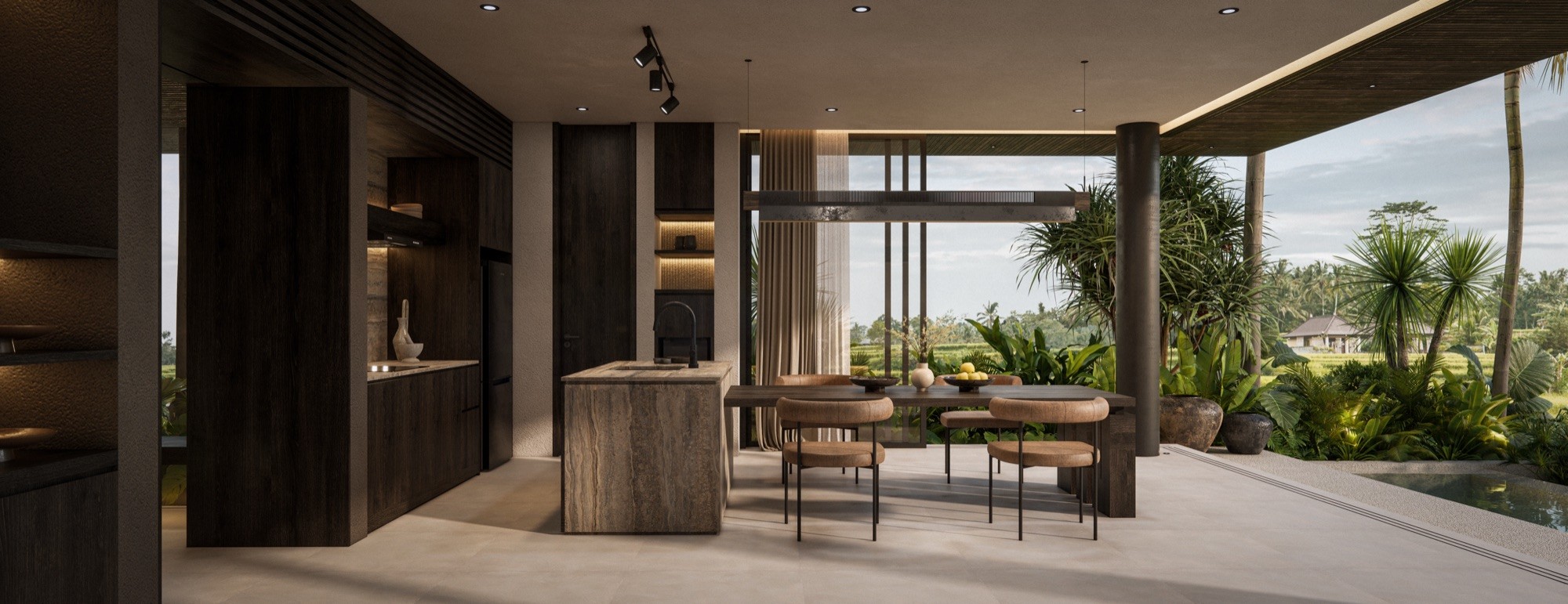
There is a version of villa ownership in Bali that involves no channel manager, no turnover cleans, no guest messages at midnight and no occupancy dashboard. It is called having a tenant, and in the family corridors of the west coast it has quietly become the strategy that wins on the numbers people actually keep.
The mechanics, which do the selling
The Bali yearly lease has three features that owners from other markets don’t quite believe until they see the first contract.
The rent arrives before the tenant does. Twelve months paid in full, upfront, is the standing custom. Not a deposit and monthlies — the year. Your receivables risk all but disappears, your void risk inside the term is zero, and your February — the month that hollows out every short-let calendar on the island — is prepaid.
The utilities are not your problem. The tenant pays electricity, water, internet, and typically pool and garden service. On a short-let villa those run to tens of millions of rupiah a year, consumed by guests with no reason to close a door while the air conditioning runs. On a yearly lease, the person paying the bill lives with the thermostat.
The building ages at household speed. A short-let villa turns over every five nights, each arrival a fresh audit of everything breakable. A family in residence for two years treats the villa as what it is — their home — and the refurbishment clock runs at a fraction of hotel pace.
The numbers, without romance
Run honestly, the comparison with short-letting is closer than the gross figures suggest and often inverts, as our long-term versus short-term guide works through in detail. The shape of it: a short-let villa must clear roughly 63–70% occupancy before it nets more than a yearly tenant, and the measured island average sits near half that. The median short-let villa in Bali would earn more, with radically less effort, on a yearly lease.
The owner’s remaining costs are staff (if retained), insurance, tax and maintenance — with the 10% final rental tax on gross for residents applying as usual. Management, where used at all, is oversight rather than operation, at a fraction of short-let rates.
What you give up is the ceiling. A top-decile short-let villa in a prime location, professionally run, out-earns any tenant. The yearly lease is not the strategy for that villa. It is the strategy for the other ninety percent — and for any owner whose time, or distance from Bali, makes operations a cost rather than a hobby.
Who the tenant is
The demand side is the strongest part of the case. Yearly tenants on the Tabanan coast are overwhelmingly relocating families and settled remote workers — school-run households on family or remote-worker permits, budgeting in years. The school inside Nuanu is the corridor’s demand engine: enrolment growth is measured family arrival, and each family needs exactly one thing the market is short of — a genuine family villa, walled garden included, on a yearly term near the school.
These tenants self-select for stability. They prepay because a school year demands it, they renew because moving children is the thing families avoid most, and a two-year term at a modest discount is a trade they often propose themselves.
Doing it properly
The strategy is simple; the contract still deserves adult attention.
Price the year, not the month. Yearly rates sit well below twelve times the monthly rate; that discount buys the prepayment and the stability. Benchmark against yearly comparables only.
Define maintenance at the boundary. Custom: tenant handles running costs and minor upkeep; structure, roof, plumbing and the systems remain yours. Write the line precisely.
Keep the staff decision explicit. Some tenants take on existing staff, some bring habits of their own. Either works; ambiguity does not.
Hold a proper deposit against damage beyond wear, and document handover condition photographically.
Stay licensed and taxed. A yearly residential lease sits more simply than short-stay accommodation, but the income is still income; keep it clean.
Where it works best
Anywhere families actually settle — which today means the corridor from Pererenan and Seseh through Nyanyi to Kedungu and the villages behind it, where gardens are big enough, the school is close enough, and the alternative nightly-rate market is thin anyway. Building specifically for this tenant — three real bedrooms, an office, a lawn, fibre confirmed — produces a rare kind of Bali asset: one where demand comes to you, and operations do not.
It will never make a spectacular Instagram case study. It makes something better: a business that runs on one contract a year, banks its revenue in advance, and lets you own a villa in Bali while living your actual life. Quiet, in this corner of the market, is not the compromise. It is the yield.

Akura
Akura Villas

